Production Materials
Filmation’s He-Man and the Masters of the Universe (1983-1985) was a high-throughput production by 1980s standards, 130 episodes across two seasons, plus a parallel She-Ra: Princess of Power run that re-used a substantial proportion of the He-Man art pipeline. The production-side material that survives gives a clear window into how the show was made.
What sits behind the scenes
A typical Filmation half-hour required between 1,500 and 3,000 individual production cels, supported by a backbone of pencil animation drawings, model sheets, layout sheets, storyboards, and gouache background paintings. The studio’s pioneering re-use of stock sequences, He-Man’s transformation, Battle Cat’s charge, Skeletor’s laugh, the “by the power of Grayskull” shot, meant some cels were filmed dozens of times across the run. Surviving stock-sequence cels and drawings are among the most recognisable production materials in the collector market.
What’s included in this section
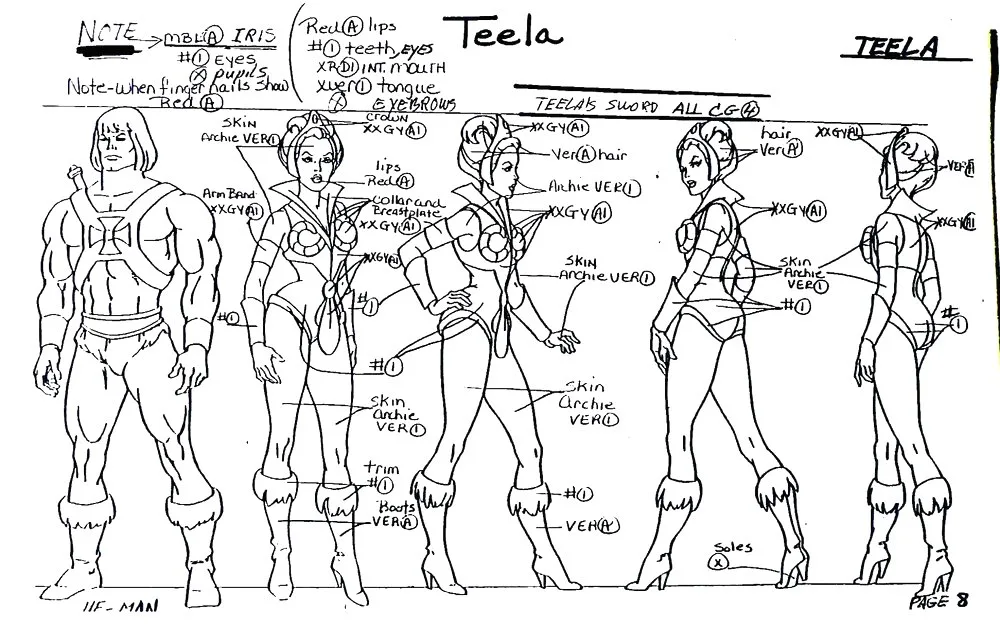
- Model sheets, Character design references that fixed He-Man, Skeletor, Teela, Man-At-Arms and the rest of the cast across the 130-episode run. Filmation distributed these as black-and-white photocopies to the various overseas animators.
- Concept art, Pre-production drawings and pastels that set the look of Eternia, Castle Grayskull, Snake Mountain and the show’s many supporting characters.
- Storyboards, Roughed-in scene breakdowns produced after the script was locked. Storyboards include camera direction, animator notes, and any dialogue cues. They are the bridge between script and animation.
- Pilot Material, The 1982-1983 early-draft material that became the basis for the series bible. This includes Mark Taylor and Roger Sweet’s character notes, the original Castle Grayskull architectural sketches, and the earliest hero/villain colour studies.
- Guide Sheets, Filmation’s internal animator reference sheets, used to ensure consistency across the overseas studios that animated each episode.
How to read this section
The Filmation production process moves from concept art -> model sheets -> storyboards -> pencil animation -> cel inking and painting -> background painting -> photographed broadcast frame. Each item in this section sits somewhere on that pipeline. Where we know the position, it’s noted in the description.
Image: Filmation studio model sheet, via characterdesignreferences.com.